
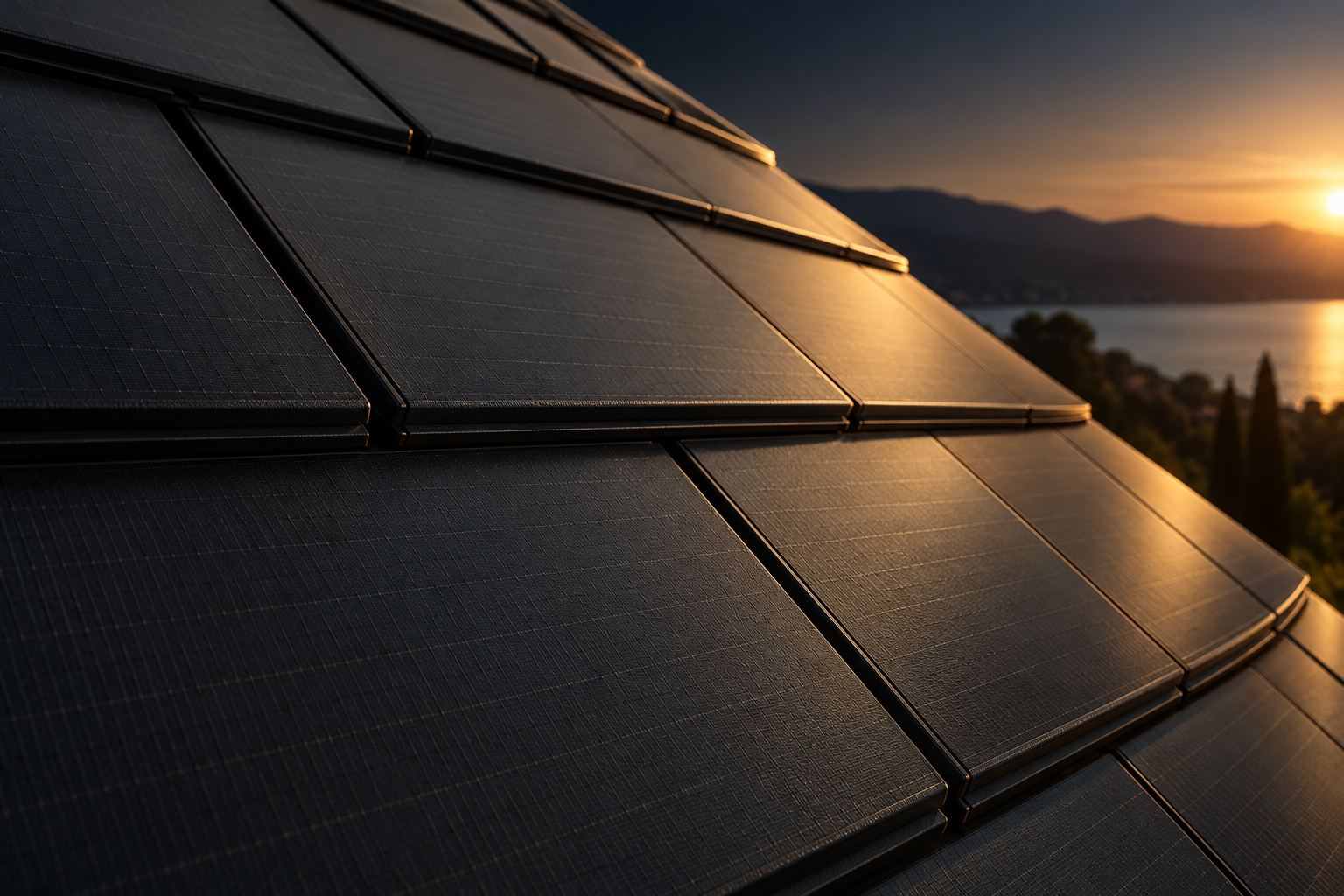
A solar roof tile combines a roofing component with photovoltaic technology. Its active cells turn light into electricity while the product forms part of the roof design.
Follow the energy from the cell through the electrical system to understand what you are choosing.
It starts with light
A photovoltaic cell contains a semiconductor. Absorbed light enables electrical charges to move, and conductive contacts collect the resulting current.
This uses light rather than heating water, as a solar water heater does. More heat does not necessarily mean more electricity: higher cell temperature can reduce performance. Thermal behaviour therefore matters too.
From the tile to the inverter and the home
Connected active components generate direct current (DC). An inverter converts it into alternating current (AC), used by the electricity grid and most household appliances.
A tile is not a standalone system that plugs into a socket. Layout, connections, inverter and protective equipment need coordinated professional design. Ask for a simple explanation of the system diagram and equipment locations.
The roofing role still matters
An integrated solar component also performs a building function. That does not mean it replaces every roof layer. Ask which roofing, waterproofing, insulation and finishing components the proposed assembly includes.
Request a drawing that distinguishes active areas from infill roofing. A uniform appearance does not necessarily mean every part of the roof generates electricity.
A power rating is only part of the picture
Power is measured in watts or kilowatts; energy over time is measured in kilowatt-hours. A product’s power rating alone is not a forecast of annual roof generation.
Ask for a yield estimate stating the layout, site conditions and calculation assumptions. Discuss shading, roof orientation, temperature and what monitoring will show after commissioning.
Will it work during a power cut?
Solar tiles alone do not establish backup capability. Generation, storage and backup are different functions. Operation during an outage needs a system designed for that purpose and suitable equipment. Do not assume every inverter or battery provides it.
If backup matters, identify the loads you want to keep running and request explicit confirmation of that capability in the proposal.
What to bring to a suitability review
Share roof drawings or photographs, the location and whether this is a new build or roof replacement. Mention any interest in storage or backup.
Request specifications for the proposed model, a component layout and an explanation of expected generation and roofing performance. These make a complete system easier to assess.
Technical sources
Technical background, not an endorsement of a VOLTECTA product or project.
DOE — Photovoltaic cell basics
Building a new home or replacing a roof?
Send a roof plan or building photographs for an initial suitability review.
Assess your roof→