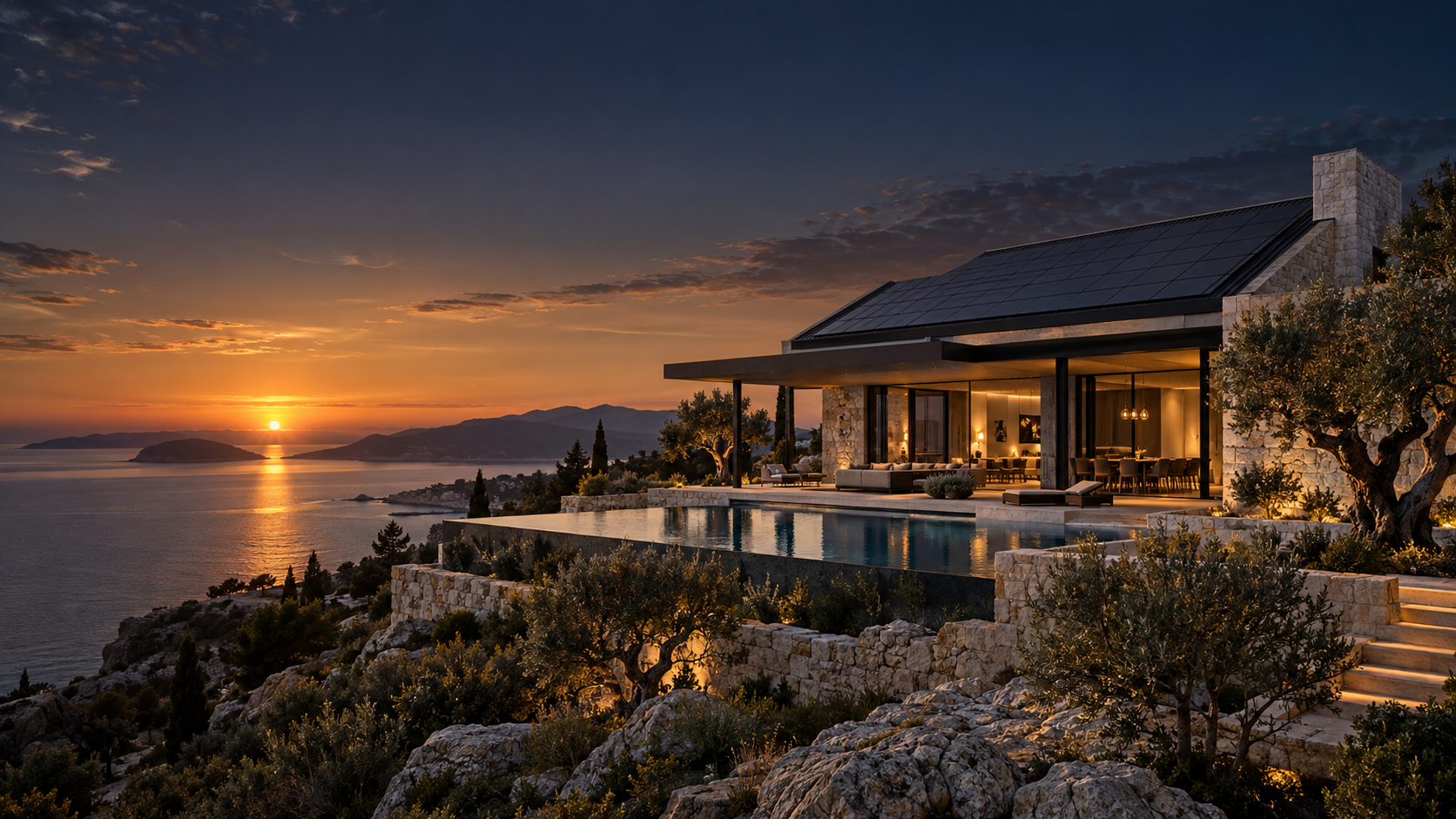
A solar roof discussion often starts with electricity generation. The home below also needs a well-designed roof, weather protection and details that work together.
In an integrated system, energy and construction share the same surface. Assess the surrounding roof assembly alongside the solar product.
Two roles, one design discussion
IEA PVPS’s BIPV guidebook considers building integration, thermal behaviour, safety and maintenance alongside generation. Electrical yield matters, but it does not describe the whole envelope.
Ask how the proposed system suits your roof, who assesses the structure and loads, and how roofing and electrical decisions are coordinated. Establish who owns that coordination early.
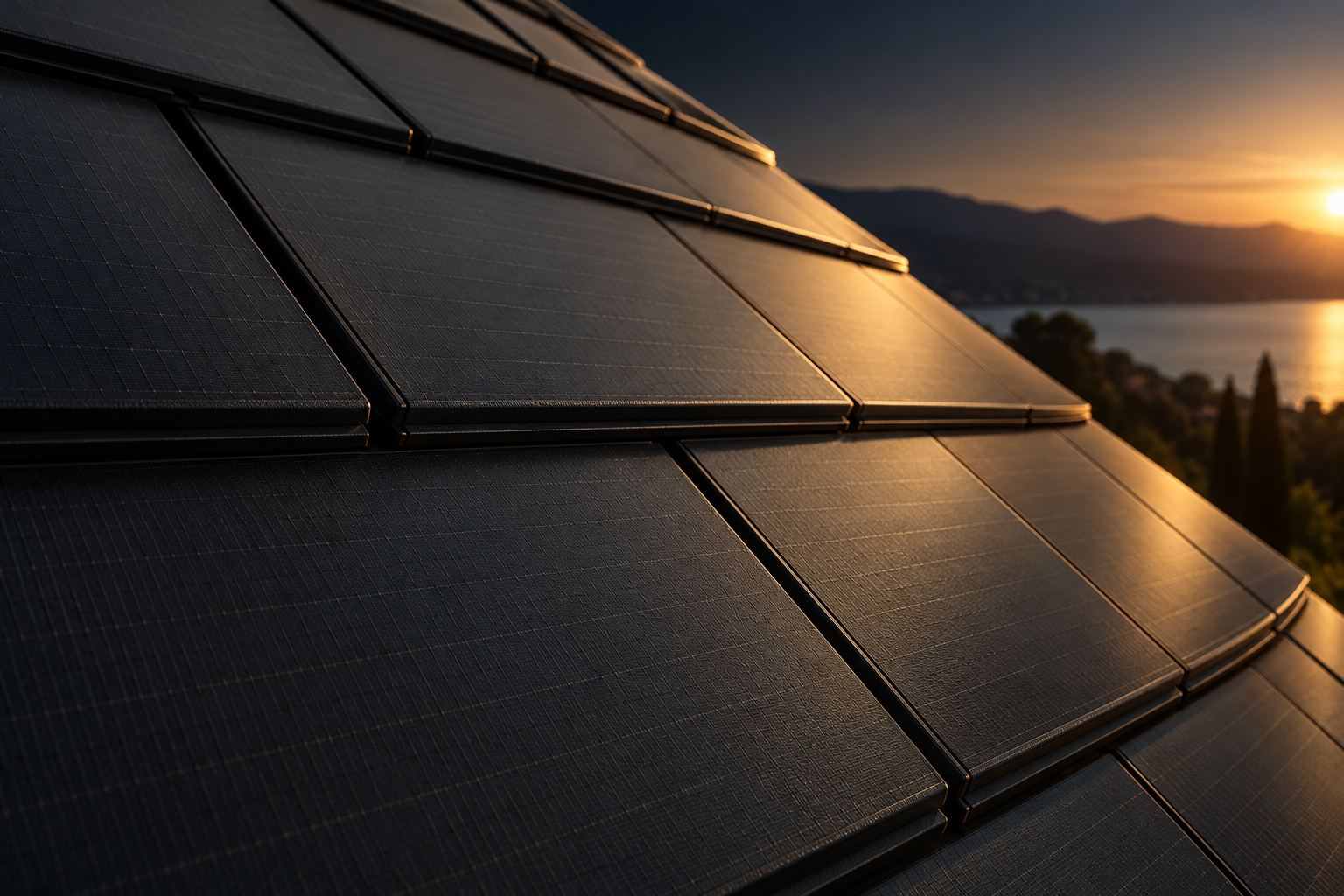
Look closely at the junctions
A rendering of a continuous tiled surface may not show the junction with a roof window, wall, ridge or gutter. We suggest requesting drawings of those details for your project.
Discuss water management, connections and equipment routes; which layers remain beneath the tiles; and which finishing components are included. Aim for a complete roof description rather than a tile list.
Location belongs in the specification
IEA PVPS identifies heat, humidity, radiation, rain and wind as potential influences on PV reliability, and discusses maintenance suited to the climate.
Tell the designers about the building’s location and exposure. Near the coast, for example, request evidence of the proposed model and components’ suitability and the relevant warranty terms. A broad claim of universal suitability is not enough for a project decision.
Design for the maintenance visit too
Before finalising the layout, ask how inspection or replacement will be accessed. Who handles electrical work, who handles roofing, and how will work involving both be coordinated?
Clarify the inspections required by the system instructions, who receives monitoring alerts and how suspected problems are assessed. Generation data alone does not replace an assessment of roof condition.
What should the handover include?
Request as-built drawings, component identification, operating and maintenance instructions and records of completed checks. Establish a contact for faults.
Read product, performance, roofing and installation warranties separately. Ask about scope, exclusions and who handles a problem while its cause is being investigated.
Start with your own roof
For an initial VOLTECTA assessment, share plans or photographs, location and project stage. For a replacement, include known information about the existing roof condition.
The aim is a coordinated architectural, roofing and electrical plan, with clear specifications, responsibilities and a way to maintain the system over time.
Technical sources
Technical background, not an endorsement of a VOLTECTA product or project.
Building a new home or replacing a roof?
Send a roof plan or building photographs for an initial suitability review.
Assess your roof→